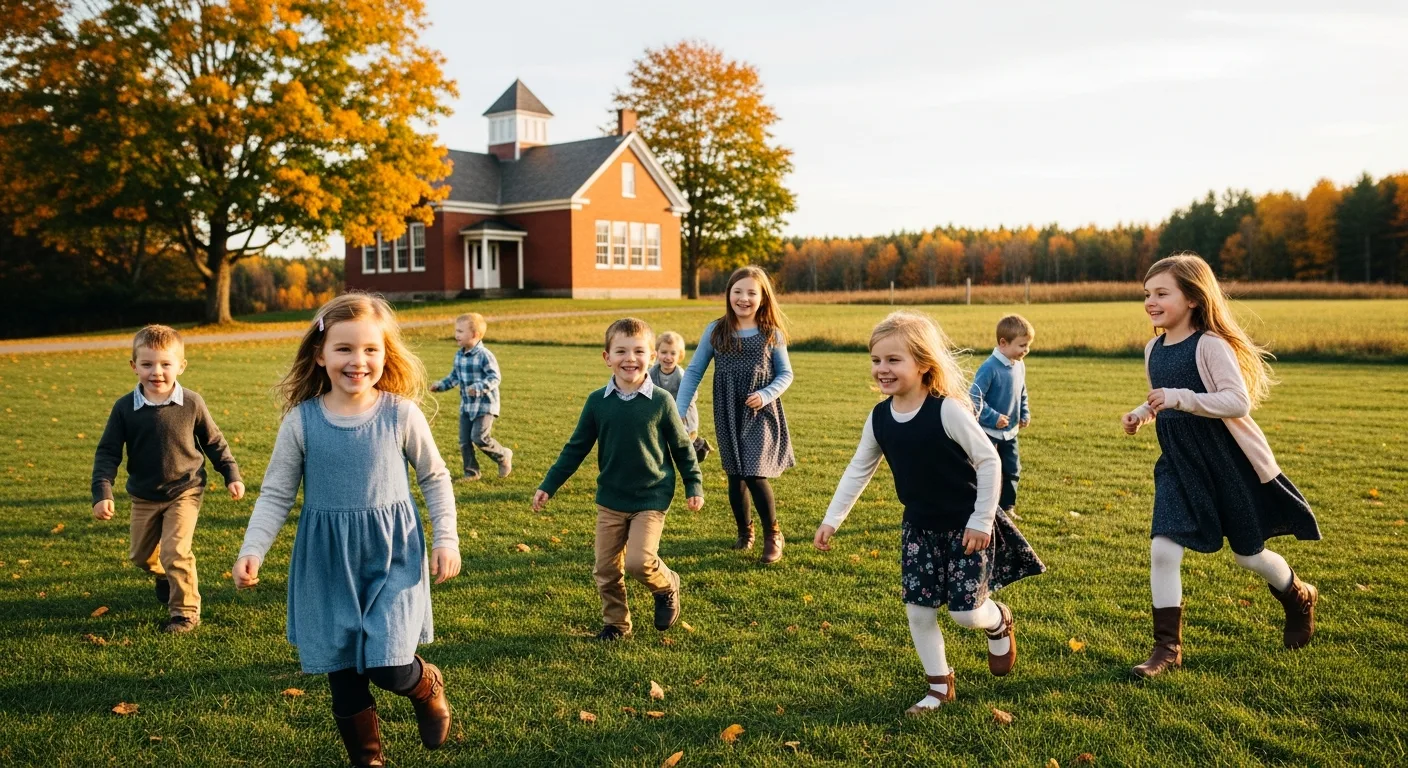
Schools & Education
Schools, Academies, and Homeschooling in Maine
Maine's school landscape is unlike any other state — town academies, a free public STEM boarding school, and one of the most permissive homeschool frameworks in the Northeast.
55+
Maine towns that tuition students to private academies at public expense
Free
Tuition, room and board at Maine's public residential STEM magnet school
Legal
Homeschooling status — among the more permissive frameworks in the Northeast
1791
Year Berwick Academy opened — Maine's independent school tradition runs deep
The Town Academy System — What Makes Maine Different
In most states, every town runs its own public school. In Maine, it has never worked that way — and for families moving here, this is one of the most important things to understand before choosing where to settle.
Roughly 55 Maine towns do not operate their own high schools. Instead, they pay tuition — at public expense — for resident students to attend a neighboring school, which may be a public regional school, a public tuitioning academy, or in some cases an independent private school. This system has existed since the 18th century and is the reason that children in small, rural towns sometimes end up at schools with boarding populations, international students, and campus infrastructure that no small town could support on its own.
The practical implication for families considering a move: the school your child attends may not be the school in your town. Before choosing a house, check which school your specific address is assigned to — and whether the town tutions students elsewhere. In some cases, the tuitioning destination is excellent. In others, it may be 45 minutes away. This varies town by town and should be confirmed directly with the local school administration.
Strongest Public School Districts
Organized by region. Rankings are based on state assessment data, graduation rates, and college placement outcomes — not US News's methodology, which disadvantages rural schools.
Southern Maine
Falmouth High School
Falmouth
Consistently ranked among the top 3 public high schools in Maine. Small class sizes, strong AP program, and one of the most competitive academic environments in the state.
Cape Elizabeth High School
Cape Elizabeth
Top-five statewide in most rankings. Tight-knit community, excellent college preparation, and proximity to Portland without the city scale.
Yarmouth High School
Yarmouth
Highly regarded across academics and arts. Yarmouth's small size (around 350 students) means real visibility for every student.
Freeport High School
Freeport
Strong academics in a town known for a balance of outdoor access and civic engagement. LL Bean's backyard — the culture shows in the school.
Midcoast Maine
Camden Hills Regional High School
Rockport
Serves Camden, Rockport, Hope, and Lincolnville. Strong arts program, sailing team, and access to Penobscot Bay makes it one of the most distinctive school environments in New England.
Brunswick High School
Brunswick
Benefiting from Brunswick's Naval Air Station history, the district is well-funded and diverse. Strong IB and AP offerings. Bowdoin College's presence in town influences the academic culture.
Medomak Valley High School
Waldoboro
Serves the St. George Peninsula and inland Knox County towns. Smaller and more rural than midcoast alternatives — solid academics with genuine community rootedness.
Western Maine
Telstar Regional High School
Bethel
RSU 44's high school, serving Bethel, Newry, and surrounding mountain towns. Outdoor education woven into the culture — Sunday River is minutes away.
Oxford Hills Comprehensive High School
South Paris
One of Maine's larger rural high schools. Serves a wide geographic area across Oxford County with a strong vocational and trades program alongside college prep.
Central & Northern Maine
Gardiner Area High School
Gardiner
Central Maine's well-regarded regional school. Close to Augusta, strong community ties, and one of the better-resourced systems in the Kennebec Valley.
Caribou High School
Caribou
The County's strongest public high school by most measures. Surprisingly robust program given the rural context — benefits from Aroostook County's agricultural and community investment in education.
Presque Isle High School
Presque Isle
The regional hub school for central Aroostook. University of Maine at Presque Isle's presence on the same campus creates dual enrollment opportunities unavailable elsewhere in the state at this scale.
Maine's Public Tuitioning Academies
These schools accept students from surrounding towns at public expense — functioning as the de facto regional high school for areas that don't run their own.
Maine Central Institute
Pittsfield, Somerset County
MCI serves students from roughly 20 surrounding towns that pay public tuition in lieu of running their own high school. Also enrolls boarding students from across New England and internationally. Strong athletics, a real campus, and a more diverse student body than most rural Maine schools. One of the most recognizable names in Maine secondary education.
Foxcroft Academy
Dover-Foxcroft, Piscataquis County
The de facto high school for much of Piscataquis County — one of Maine's most rural counties. Serves tuition towns across a wide geographic area. Strong community connection. Boarding available for students from more remote areas.
George Stevens Academy
Blue Hill, Hancock County
Serves the Blue Hill Peninsula towns including Brooklin, Brooksville, Castine, Penobscot, Sedgwick, and Surry. The academy's boarding program and arts culture reflect the peninsula's character — one of the more distinctive school environments in coastal Maine.
Lee Academy
Lee, Washington County
Serves rural Washington County towns where running a separate high school is not practical. Strong outdoor education component. International boarding program supplements the local tuition population and creates unusual cultural diversity in a very remote setting.
Erskine Academy
China, Kennebec County
Serves China, Palermo, Windsor, and Somerville as a public tuitioning school. Well-regarded in central Maine for strong academics and a close community feel. A good option for families settling in the lakes region between Augusta and Belfast.
Independent and Specialized Schools
Maine has a deep independent school tradition — and one public school that most people from outside the state have never heard of.
Do Not Overlook This
Maine School of Science and Mathematics
MSSM in Limestone, Aroostook County is one of roughly a dozen public residential STEM high schools in the United States. Junior and senior year — the full program is tuition-free for all Maine residents. Room and board are covered by the state. The school enrolls around 100 students total, housed on a former Air Force base, with class sizes that most prep schools can't match and college outcomes that rival them. If your family includes a student oriented toward math, science, or engineering who is ready to live away from home, MSSM is the kind of resource that should change where you choose to settle in Maine.
Learn more about MSSMIndependent Boarding & Day
Gould Academy
Bethel, Oxford County
Strong outdoor education focus in a ski town — Sunday River is the backyard. Rigorous college prep curriculum with a culture built around the natural environment of the western mountains. Post-graduate year program draws athletes and students looking to strengthen their application before college.
Independent Boarding & Day
Kents Hill School
Kents Hill, Kennebec County
Founded in 1824. One of New England's older boarding schools, situated on 400 acres in central Maine. Strong arts and athletics alongside traditional college prep. Day students from the surrounding Augusta-area communities attend alongside the boarding population.
Independent Day — Founded 1791
Berwick Academy
South Berwick, York County
The oldest school in Maine, founded in 1791. Located in southern York County, accessible from the Seacoast region of New Hampshire and coastal Maine. Rigorous college prep, strong endowment for a school its size, and a genuine sense of institutional history.
Independent Day — PreK–12
Waynflete School
Portland
Portland's premier independent day school. Progressive pedagogy, strong arts integration, and deep community ties in a walkable neighborhood adjacent to the Portland Arts District. The school families who choose Waynflete tend to be deeply embedded in Portland's civic and cultural life.
Homeschooling in Maine
Maine's homeschool framework is one of the more permissive in the Northeast — notify, cover the required subjects, assess annually. The co-op and community infrastructure varies by region but is often stronger than newcomers expect.
Legal Framework
Maine homeschooling law requires parents to notify the local school superintendent each year. The notification must cover the subjects to be taught, which by law must include English language arts, math, science, social studies, health, physical education, library skills, fine arts, and Maine studies. The law does not specify curriculum or require any particular approach.
Annual Assessment
Maine requires annual assessment of homeschooled students, but gives families three options: a nationally normed standardized test, a portfolio review by a certified Maine teacher, or an evaluation by a Maine-certified teacher through an interview or other method. Most Maine homeschool families use the portfolio route, which is flexible and non-intrusive.
Co-ops and Community
Maine's homeschool co-op network is strongest in the midcoast, western mountains, and greater Portland area. Co-ops typically meet 1–2 days per week and offer group instruction in subjects parents prefer not to teach solo — foreign languages, lab sciences, art, and physical education. The Maine Homeschool Association maintains an active directory.
Virtual Options
Maine Virtual Academy (MEVA) offers a full K–12 online public school curriculum at no cost to Maine residents. It is a state-accredited public school — students who enroll are enrolled students, not homeschoolers — but many families use it as a hybrid with homeschool co-ops and extracurriculars. Access to public school sports and activities while learning online is governed by local district policy and varies by town.
Dual Enrollment
Homeschooled students in Maine who are 15 or older may enroll in community college courses through the Early College program, often at reduced or no cost. The University of Maine System also accepts dual enrollment arrangements. For high schoolers pursuing rigorous academics, dual enrollment at a Maine community college — particularly in STEM or trades — is a legitimate and often overlooked pathway.
Rural Homeschool Culture
In many rural Maine towns, homeschooling is not a fringe choice — it is a well-established community norm. Families who move to Aroostook County, the western mountains, or the Downeast coast often find an existing network of co-ops, group activities, and social structures for homeschooled children that is more developed than what they left behind in suburban school systems.
Before you move: Maine's homeschool landscape varies considerably by region. The midcoast and greater Portland area have well-developed co-op networks. Aroostook County and the western mountains have strong homeschool communities but thinner co-op infrastructure. Downeast Maine is somewhere in between. Connecting with the Maine Homeschool Association before your move is the fastest way to understand what exists in your target area.
Life Beyond the Classroom
Maine childhood is structurally different from suburban childhood in ways that are hard to describe until you are in it. The outdoor infrastructure — ski clubs, 4-H, sailing programs, summer camps, town recreational leagues, harvest fairs — fills the calendar in ways that compete well against screens by default. The seasonal rhythm does a lot of the work: maple sugaring in spring, farm stands and overnight camp in summer, harvest fairs and apple picking in fall, skiing and ice fishing in winter. Parents who move here from suburbs often say their kids are outside more within six months than they were in the previous six years.
All 16 Counties
4-H
Maine 4-H is one of the strongest in the country — particularly in agricultural communities. Animal projects, robotics, cooking, photography, forestry, and community service. In Aroostook County, 4-H participation rivals school sports in terms of community identity. County fairs provide the public competition calendar that structures the whole year.
Mountain Towns Statewide
Youth Skiing
Camden Snow Bowl — community-owned, with a view of Penobscot Bay — runs a youth program with lift tickets under $30 for kids. Sunday River and Sugarloaf both have structured junior racing programs. Black Mountain of Maine in Rumford is among the most affordable ski areas in New England. Shawnee Peak serves the Bridgton area. In mountain towns, skiing is what kids do on weekends, not a special occasion.
Highest Density in the US
Summer Camps
Maine has one of the highest concentrations of overnight summer camps in the country — particularly in the midcoast lakes region and western mountains. Chewonki (Wiscasset), Kieve-Wavus (Nobleboro), and dozens of others offer everything from traditional camp to sailing to wilderness survival. Kids who grow up near these programs often serve as counselors. The camp culture runs deep.
Rural Communities
FFA & Agricultural Programs
Future Farmers of America chapters operate throughout rural Maine — particularly in York, Kennebec, Somerset, and Aroostook counties. FFA connects school directly to the land, teaching animal science, agribusiness, and food systems. For families farming or homesteading, FFA gives kids a peer community organized around the same values their parents moved to Maine to pursue.
Coastal & Midcoast Maine
Youth Sailing
The Penobscot Bay community runs some of the most active youth sailing programs in the Northeast. The Rockport Marine program, Megunticook Yacht Club, and various Camden-area organizations teach racing and seamanship from a young age. On Penobscot Bay, sailing is not a privilege — it is the local sport.
Western & Northern Maine
Nordic & Outdoor Clubs
Nordic ski clubs maintain groomed trail networks in most mountain communities — often with youth membership at nominal cost. School outdoor clubs, Maine Audubon youth programs, and AMC junior hiking groups are active throughout the state. In the right town, a kid can ski, snowshoe, climb, and paddle within a 20-minute drive of home, organized by clubs that cost less than a monthly streaming subscription.
Community Rinks Statewide
Hockey & Ice Sports
Maine has a strong youth hockey culture centered on Bangor, Portland, and the river cities. Many smaller towns share ice time at regional rinks. The culture is less competitive-club-dominated than in Massachusetts and Connecticut — community leagues still drive most participation, keeping costs manageable for families in rural areas.
Annual Anchors
Harvest Fairs & State Fair
The Fryeburg Fair (October, Oxford County) is one of New England's great agricultural fairs — oxen pulls, 4-H livestock, demolition derby, apple pies. The Skowhegan State Fair (August) is older still. Windsor Fair, Union Fair, and a dozen county fairs dot the calendar from August through October. For kids, these fairs are the context in which 4-H and FFA work becomes real and public.
Year-Round Programs
Arts & Music
Kneisel Hall in Blue Hill runs summer chamber music programs for young musicians at a serious level. Maine State Music Theatre (Brunswick) and Portland Stage Company offer youth conservatory programs. The Maine Arts Commission funds school residencies statewide. In communities with a strong arts culture — Blue Hill, Portland, Rockport, Farmington — arts involvement for kids is a genuine alternative to the sports-or-screens binary.
Towns Where Kids Thrive
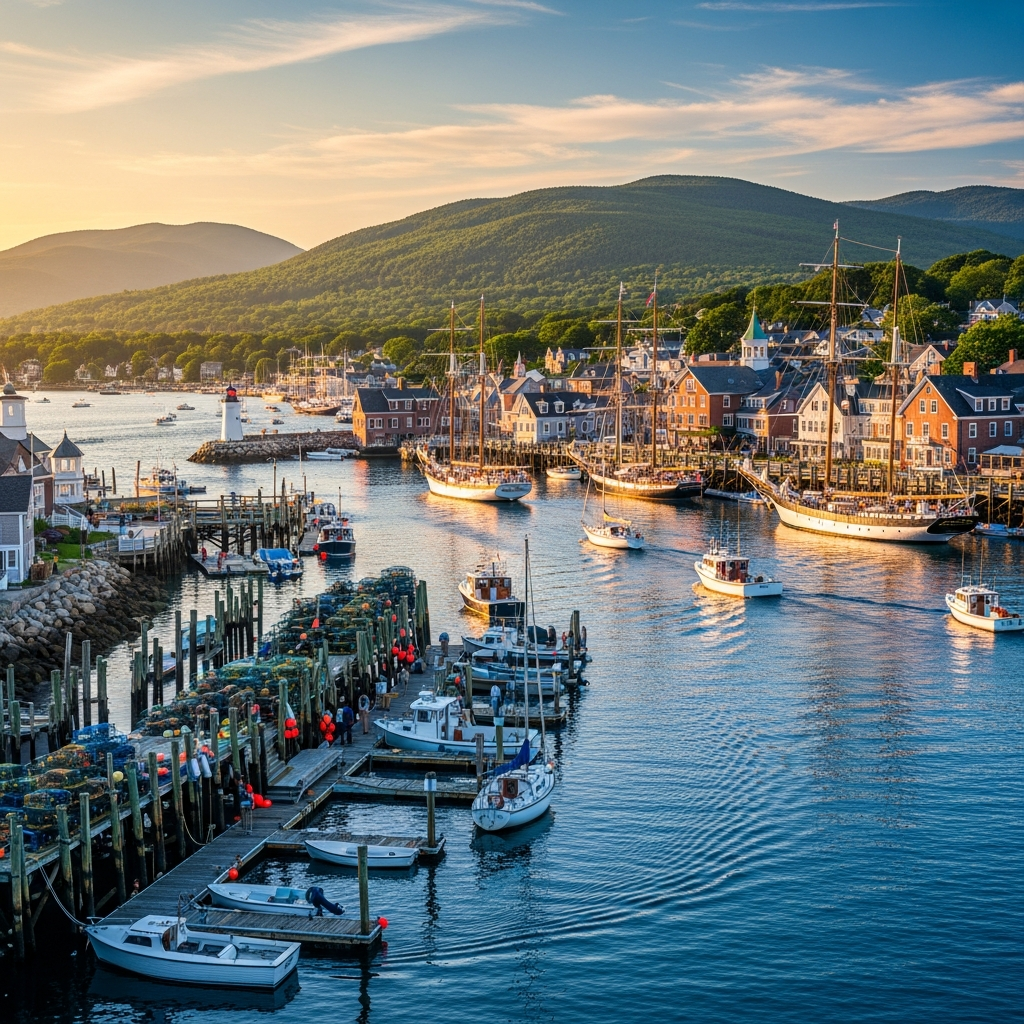
Midcoast
Camden & Rockport
Camden Snow Bowl skiing, Penobscot Bay sailing, Kneisel Hall youth music, CMCA art programs, and a year-round community small enough that kids know their neighbors. The town is compact enough that older kids move independently — to the harbor, to the library, to the hill.
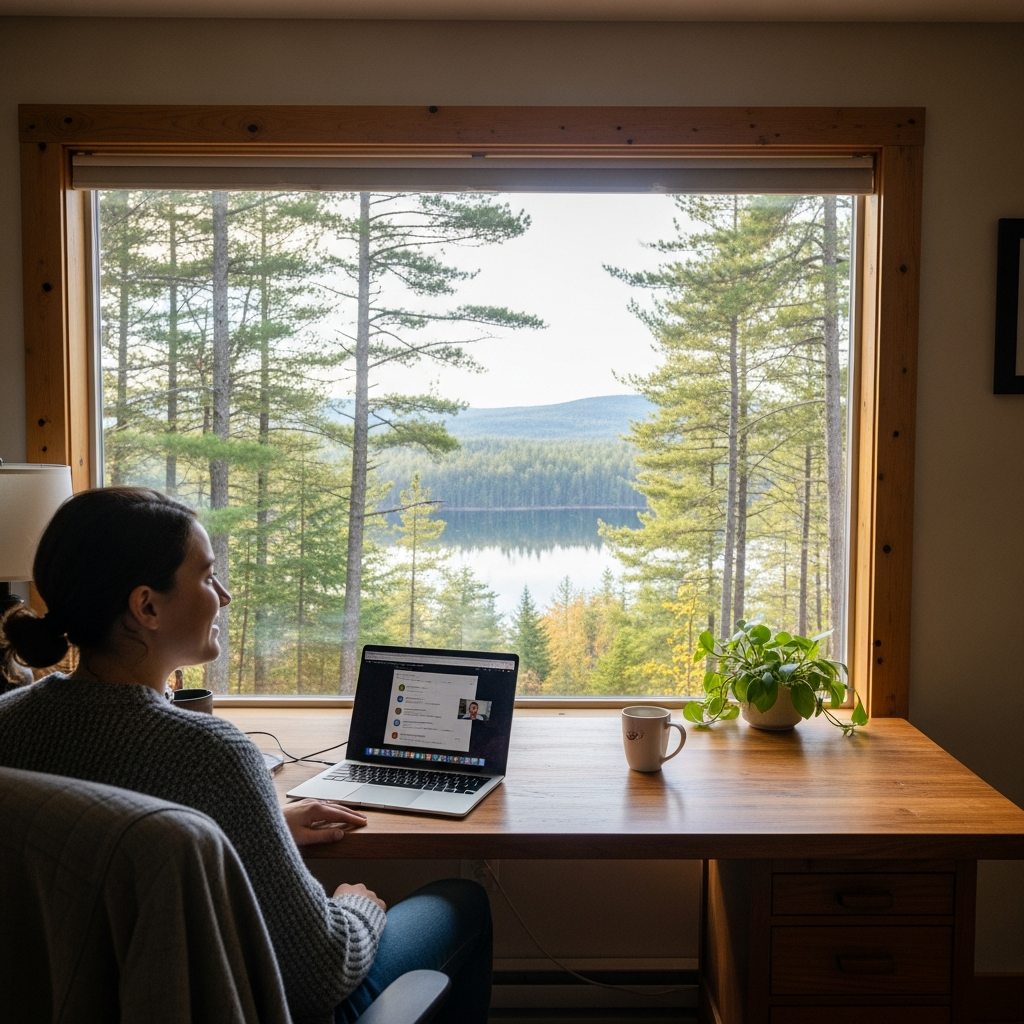
Western Mountains
Bethel
Sunday River ski programs define winter. Hiking, climbing, and paddling define the rest of the year. Telstar Regional High School has outdoor education embedded in its culture, and Gould Academy's presence gives the town a collegiate energy that benefits the whole community.
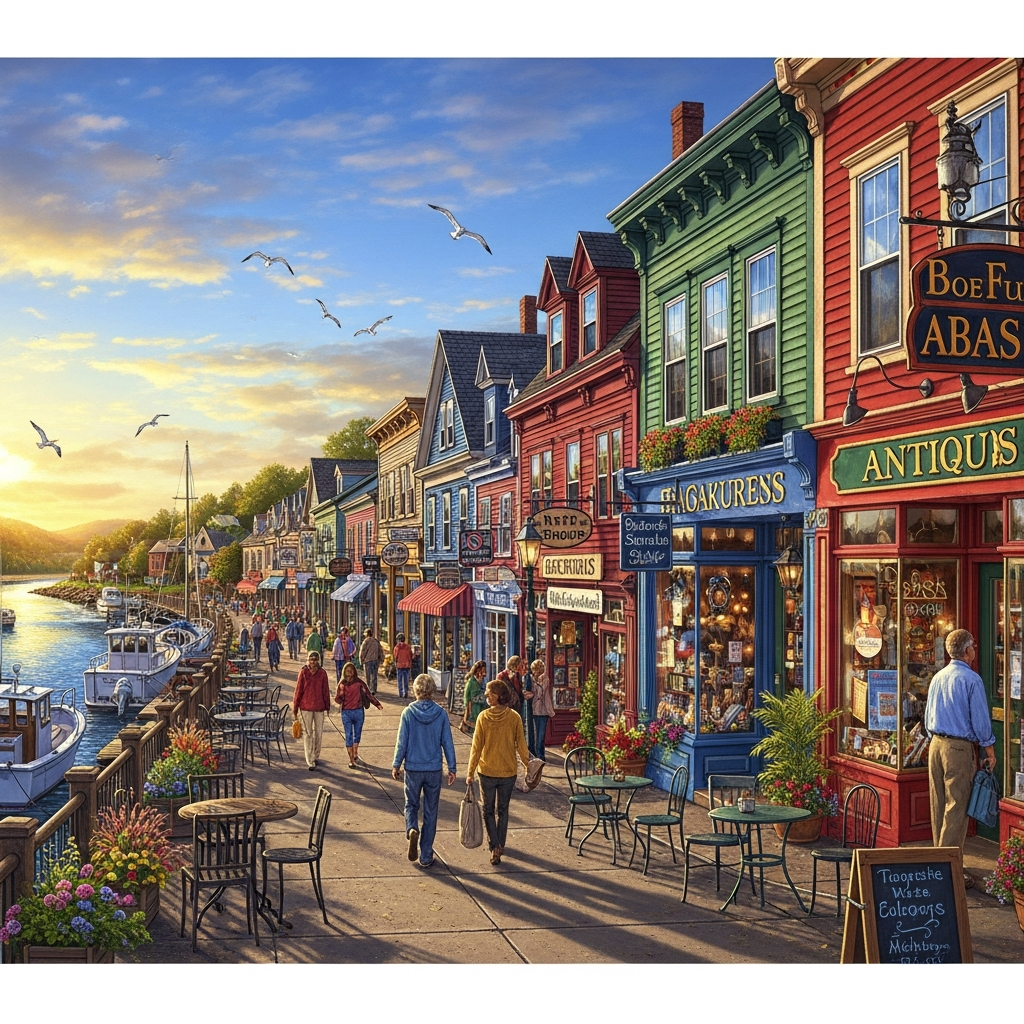
Midcoast
Damariscotta
Chewonki is nearby. The town is tightly knit enough that kids grow up knowing local farmers, fishermen, and shop owners by name. Newcastle and Damariscotta share a school district that punches well above its size. The Great Salt Bay estuary is a backyard science classroom.
Downeast
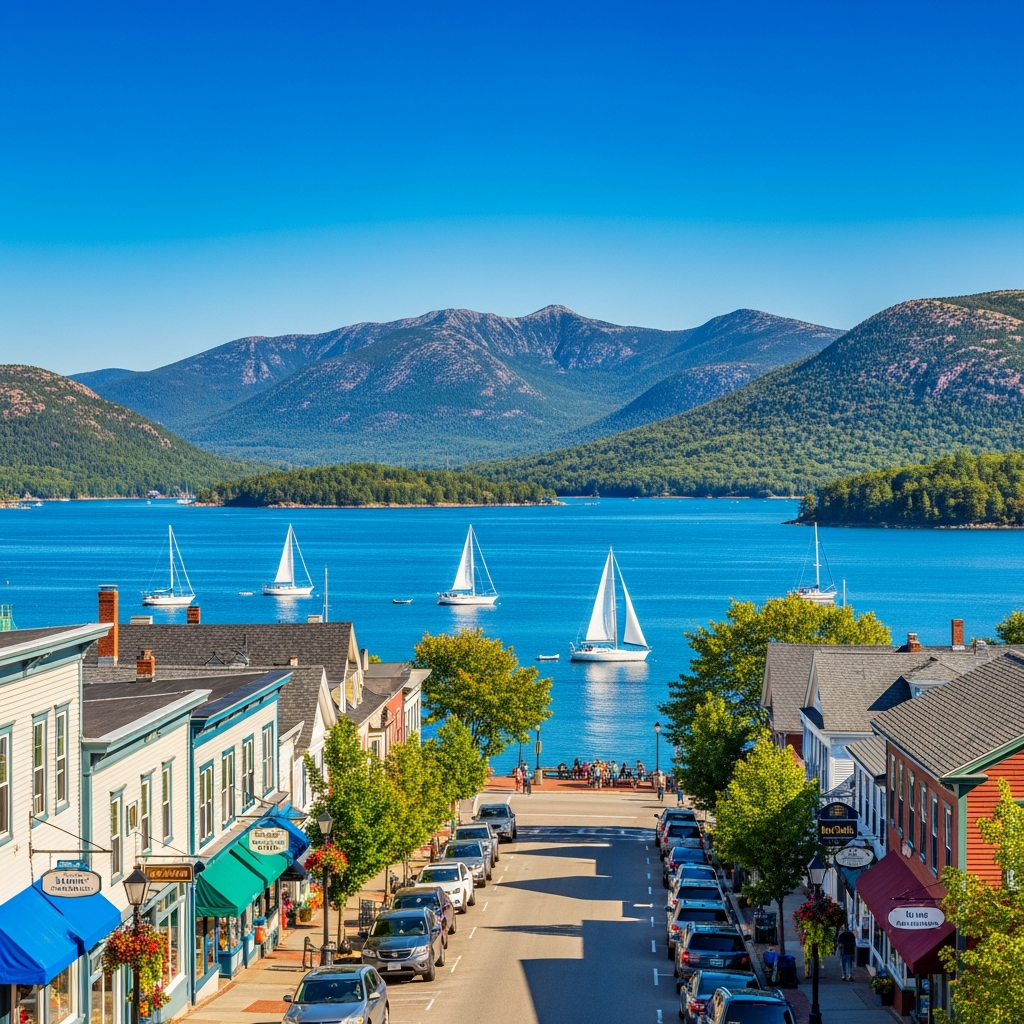
Bar Harbor & MDI
Acadia National Park as a literal backyard — hiking, rock climbing, sea kayaking are ordinary weekend activities. Island life imposes a degree of self-reliance that shapes kids differently than mainland suburbs. MDI High School's outdoor program is one of the most distinctive in the state.
Western Maine
Farmington
University of Maine at Farmington brings arts programs, lecture series, and academic energy to a small rural town. Sandy River corridor provides genuine outdoor access. The town has a disproportionate number of artists, educators, and craftspeople — which shapes the social environment for kids growing up here.
Aroostook County
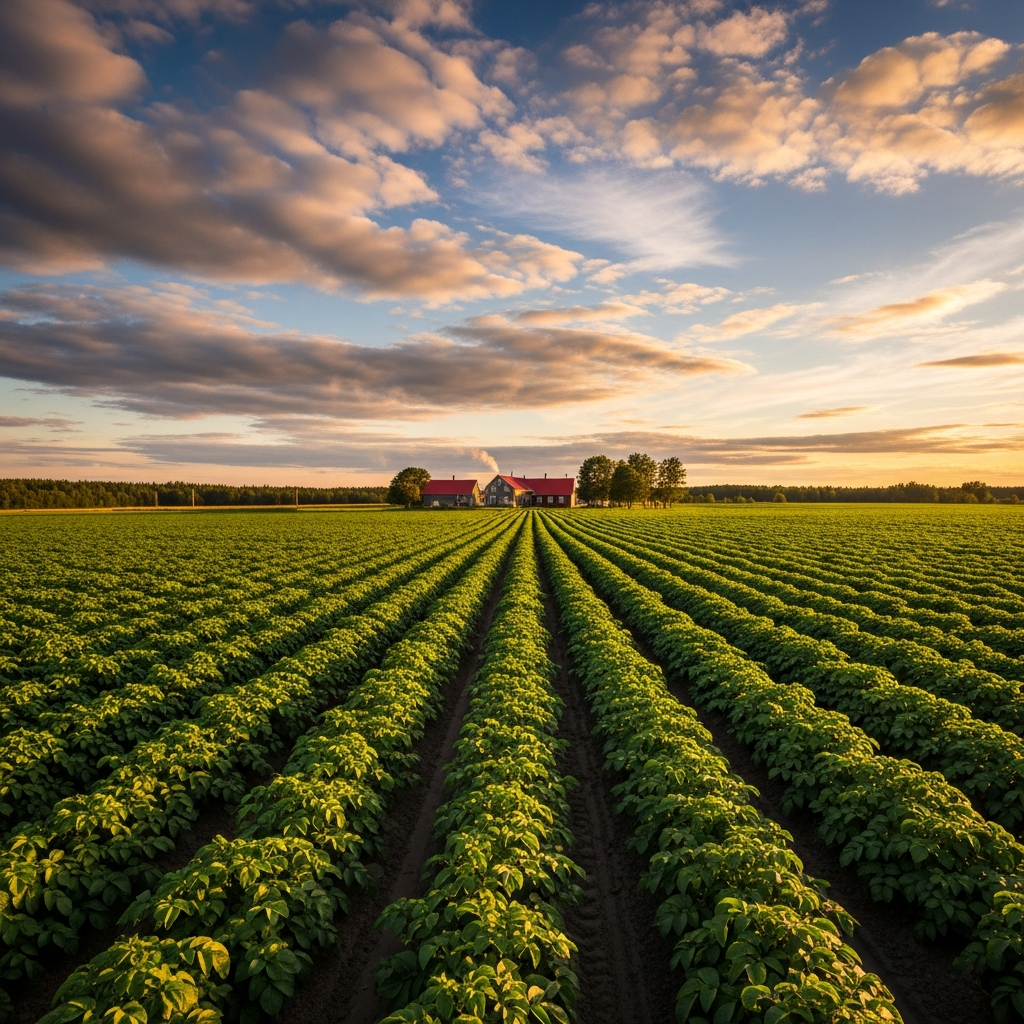
Presque Isle
4-H and FFA are woven into community identity in a way that simply does not exist in southern Maine. Strong winter sports culture including hockey. University of Maine at Presque Isle creates dual enrollment options for motivated high schoolers. The sky — dark, wide, and northern — is a constant presence.
On independence: One of the things parents consistently mention after moving to Maine with kids is how quickly children gain physical independence — walking to a friend's house, biking to the library, going to the pond without an adult. This is partly geography (small towns are navigable on foot or by bike) and partly culture (Maine communities still expect kids to be outside and moving). It is not universal, and it depends heavily on the town, but it is real enough to be worth weighing as a quality-of-life factor alongside school rankings and test scores.
Voted Best Moving to Maine Guide — Updated for 2026
The Maine Relocation Guide
Includes a school district reference section: town-by-town tuitioning arrangements, a list of public and private academies by county, and homeschool notification requirements by region.