Maine was almost entirely logged between 1820 and 1920. What survived — and what grew back — reveals the deep relationship between Maine people and their woods.
Voted Best Moving to Maine Guide — Updated for 2026
The complete guide to moving to rural Maine — town profiles, cost-of-living worksheets, winterizing checklists, and property guidance.
Download — Pay What You WantThe Logging That Remade the State
The Maine that existed before European settlement was dominated by white pine — trees 150 to 200 feet tall and six feet across at the base, so straight and tall they were harvested by the British Royal Navy as mast trees before the Revolution. By 1900, nearly every original-growth tree in Maine had been cut. The logging camps that ran the river drives — floating logs down the Penobscot and the Kennebec to the mills — were among the largest industrial operations in 19th-century America.
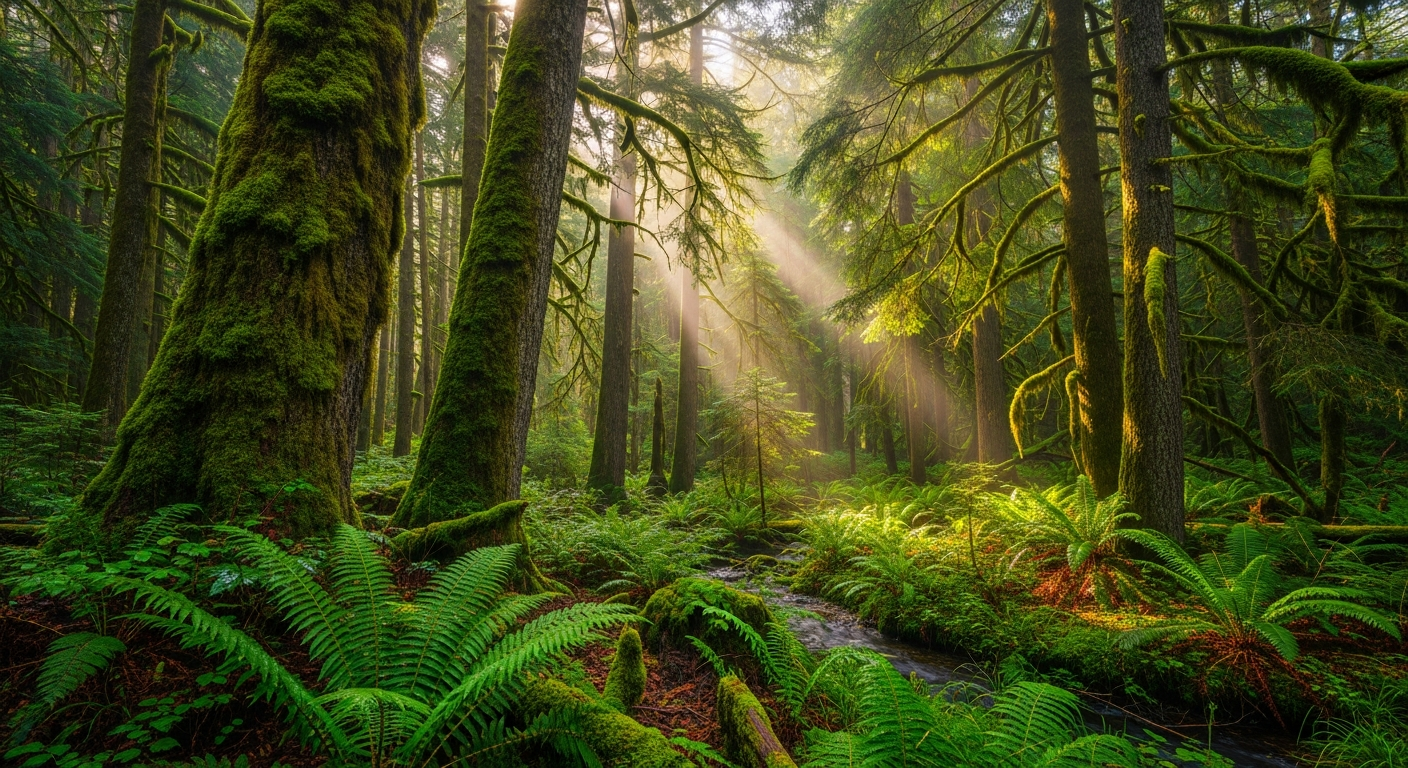
What replaced the original forest was second-growth — smaller, faster trees that grew back in the light created by the cutting. That second-growth forest is what covers 89% of Maine today. It is younger and less diverse than what came before, but it is genuine forest: the moose, the bear, the bobcat, and the fisher have all returned. The woods are real again, even if they are not the same woods.
What Survived
Small pockets of original-growth forest survived in places that were too steep, too remote, or too wet to log economically. Big Reed Forest Reserve in northern Maine contains one of the largest old-growth forest remnants in the eastern United States — 4,000 acres of trees that have never been cut, with white pines and hemlocks that were old when the Revolution was fought.
The Nature Conservancy owns Big Reed and manages it as a research and preservation site. Access requires a permit and a serious commitment to remoteness. But the trees are there — the real ones, the originals — and standing among them is one of the stranger experiences available in New England. The silence is different. The scale is different. You feel, very specifically, how much was lost.
The Working Forest and the People Who Live In It
Maine's relationship with its forest is not a preservation story — it's a working story. Fourteen million of Maine's eighteen million forested acres are privately owned, largely by timber companies and investment funds that manage them for long-rotation timber harvest. The paper mills that once employed every family in towns like Millinocket and Rumford have mostly closed, but the logging continues.
The people who live at the edge of Maine's working forest — the loggers, the guides, the small landowners with a few hundred acres — have a relationship with the woods that is practical and intimate. They know which stands are mature, where the deer yard up in winter, which roads wash out in spring. The conservation ethic that has grown over the past thirty years exists alongside this working knowledge, not in opposition to it. That tension — and that cooperation — is what makes Maine's landscape what it is.