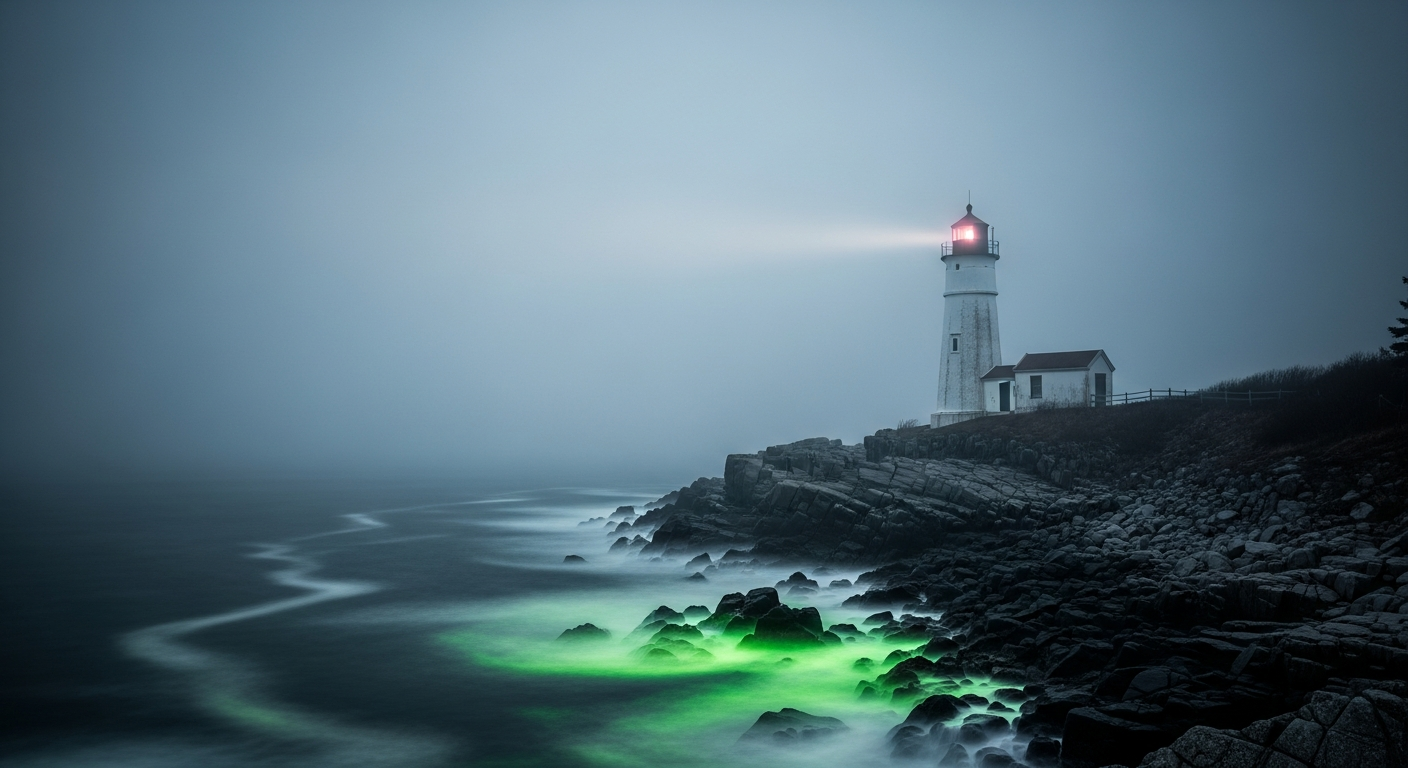
Maine has 65 historic lighthouses. Several have occupants who never left — the keepers who spent decades watching the sea don't all seem to have gone.
Voted Best Moving to Maine Guide — Updated for 2026
The complete guide to moving to rural Maine — town profiles, cost-of-living worksheets, winterizing checklists, and property guidance.
Download — Pay What You WantWhy Lighthouses Hold Their Dead
A lighthouse keeper's life in the 19th century was one of the most isolated existences in America. The keepers of the outer islands — Seguin, Matinicus Rock, Saddleback Ledge — lived months at a time beyond the horizon, their only contact a supply tender that came when weather allowed. The loneliness was absolute. The responsibility was total. Ships depended on the light being lit. People died when it wasn't.
That kind of intensity leaves a mark on a place. Whether you believe in ghosts or not, there is something that happens to a building that has been the site of that much concentrated human attention — years, decades, whole lives given over to a single fixed purpose. Maine's lighthouses feel inhabited in a way that's hard to explain and impossible to ignore once you've felt it.
Seguin Island: The Organ That Plays Itself
Seguin Island sits five miles out to sea off the mouth of the Kennebec River — far enough from shore that on a foggy day it vanishes entirely. The lighthouse there is the second oldest in Maine and the highest above sea level. The story told about Seguin concerns a keeper's wife who went mad.
According to the account passed down among lightkeepers, the woman asked her husband to bring her a piano to ease the isolation. He could only find an organ, and he brought that instead. The wife learned one song and played it, continuously, until the sound drove the keeper to destroy the instrument with an axe. She never recovered. Some of the volunteers who staff the island today report hearing faint music when no music is being played. They report it matter-of-factly, the way you report weather.
Wood Island: A Murder That Left a Presence
Wood Island Light, off Biddeford Pool in southern Maine, is the site of an 1896 murder. A fisherman named Howard Hobbs, drunk and volatile, shot and killed the island's sheriff. Hobbs fled into the lighthouse and, later that night, turned the gun on himself. The keeper who found the bodies — Frederick Milliken — never quite recovered from what he saw. He became increasingly erratic and eventually drowned, some say by his own hand, in a cistern on the island.
The Friends of Wood Island Lighthouse have spent years restoring the keeper's house, and the volunteers who work there are accustomed to the stories. Doors that open without wind. A presence in the keeper's quarters at night. The sound of someone walking on the upper floors when no one is upstairs. They speak about it with the equanimity of people who have made their peace with what shares the island with them.
Owls Head: The Light That Rings Its Own Bell
Owls Head Light, at the southern entrance to Rockland Harbor, is one of the most visited lighthouses in Maine. The ghost associated with it is benevolent, according to the stories — a former keeper who maintains a watchful presence and has been credited, by multiple Coast Guard families who lived there, with lighting the fog bell when the automatic system failed.
There are practical people, not given to mysticism, who have lived at Owls Head and come away with stories they can't explain. A Coast Guard officer's daughter reported waking to find all the furniture in her room rearranged. A keeper's wife reported silver left polished that she hadn't polished. Whatever the explanation, the light at Owls Head has never failed to warn a ship. Some things don't need an explanation to be true.