Maine's autumn is ten weeks of extraordinary light and cold nights — from foliage roads and root cellars to apple pressing and hunting season.
Voted Best Moving to Maine Guide — Updated for 2026
The complete guide to moving to rural Maine — town profiles, cost-of-living worksheets, winterizing checklists, and property guidance.
Download — Pay What You WantThe Light Changes First
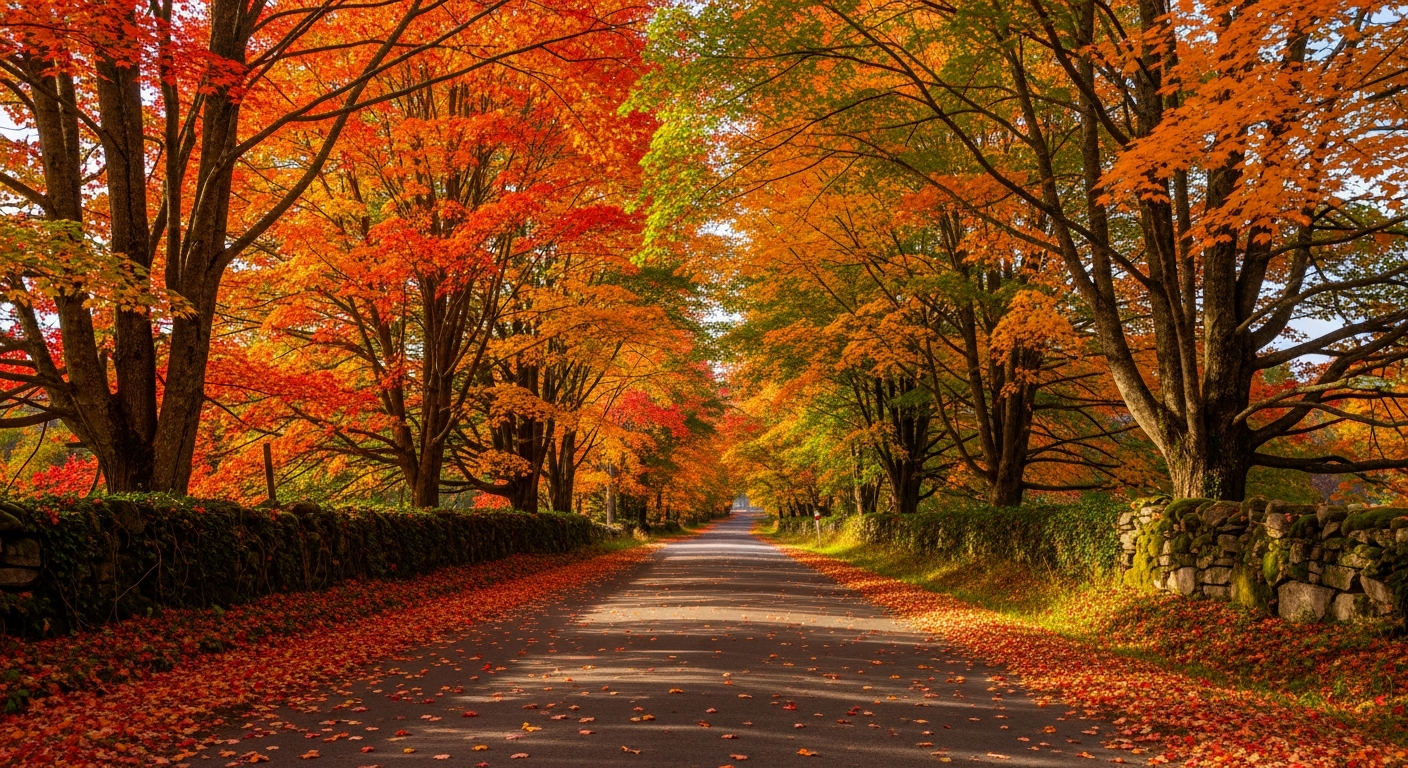
You notice it in August, before the leaves turn: the light goes golden earlier in the afternoon. The shadows get longer. The air starts carrying something crisp after sunset. Maine's fall announces itself slowly, then all at once — and the window from peak foliage to bare trees can be as short as ten days in the northern counties.
The foliage sequence moves south. Aroostook County peaks in late September. The midcoast hits its peak in mid-October. By early November, even the southern coast has gone bare. If you want the full show, you follow it — a long weekend in the County in late September, back home in time for the midcoast peak.
Foraging: What's Actually Out There
September and October are prime foraging season. Black trumpet mushrooms fruit in late August and September in mixed woods — they're easy to identify and among the best-tasting mushrooms in the world. Hen of the woods (maitake) appears at the base of oaks in October. Wild apples are everywhere along old farmstead edges. Rosehips are ready after the first light frost. Beach plums, if you know where the thickets are, ripen in September on the coast.
The wild blueberry barrens in Washington and Hancock counties finish their harvest in August, but the abandoned farmstead blueberries that grow on roadsides across Maine are ripe into September. They're smaller and more complex than cultivated berries. Bring a container and take the back roads.
The Work of Fall
If you're heating with wood, September is the month to have your full wood supply in. The rule is two cords per bedroom, properly seasoned and stacked with airflow. Gardens need to be put to bed: the compost turned, the beds covered with straw or leaves, the garlic planted (October, before the ground freezes) for next July's harvest.
The root cellar, if you have one, gets loaded in October. Carrots, beets, potatoes, winter squash, apples — anything that stores well in cold and dark. A good root cellar stays between 32 and 40 degrees with moderate humidity, and what goes in there in October can feed you into February.
Hunting Season
Moose season opens in October by lottery permit only — Maine issues roughly 2,000-3,000 permits per year, and the waiting list is long. Deer season runs through November. For the hunters who participate, these aren't recreational pursuits — they're a meaningful part of how the year is structured and how the freezer gets filled.
Even for people who don't hunt, fall in Maine involves a certain attention to the season that is hard to maintain in a city. You notice what's ripe, what's ready to be put away, what needs to be done before the cold comes. The urgency is real but not anxious. It's the urgency of a life that still pays attention to the calendar of the land.